
The Human Edge in the Age of AI Customer Service
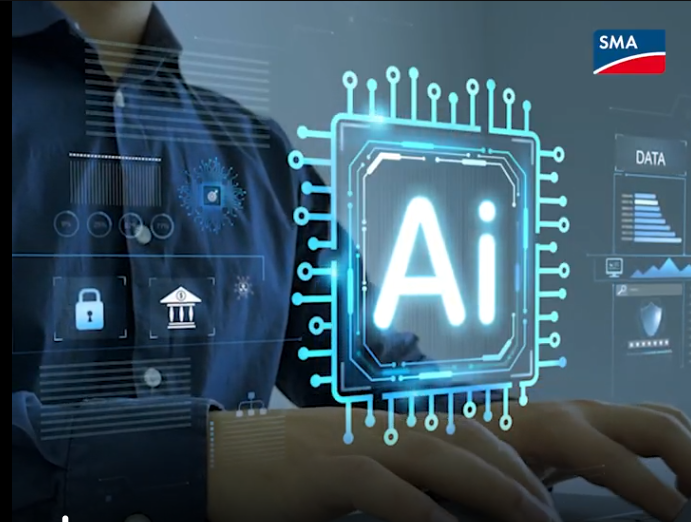
SMA America’s James Fox on trust, responsiveness and why customer relationships still depend on people.
Artificial intelligence is rapidly changing the way companies deliver service. Predictive analytics, automated workflows, faster diagnostics and smarter data management are all reshaping customer expectations across the energy industry. But amid all the excitement around technology, there is still one thing that cannot be automated: trust.
That was the focus of a recent conversation between SMA America’s Trish Moratto and James Fox, Senior Director of Customer Service & Key Account Management for Large Scale Service at SMA America.
In this interview, James reflects on the evolving role of service leadership in an AI-focused world, and why responsiveness, active listening and accountability still sit at the center of strong customer relationships.

AI can help teams identify issues faster, surface valuable insights and spend less time on administrative tasks. But while technology continues to enhance how service is delivered, James believes the most successful organizations will be those that combine these tools with something equally important: trust, responsiveness and human connection.
James joined SMA America during a period of significant transformation within the company’s service organization. While the tools available to service teams continue to evolve rapidly, he believes the foundation of customer relationships remains surprisingly unchanged. His vision has led the team with a renewed commitment to a human first approach.
“AI is a tremendous asset,” James explained during the conversation. “The speed it gives us, the insights we can surface for customers around their systems and service needs, that is genuinely valuable. But the core of what builds a lasting customer relationship has been the same long before these tools existed. It’s showing up as a human being who actually cares.”
That philosophy shapes even the smallest interactions. For James, responsiveness is one of the clearest demonstrations of respect and accountability.
“If a customers reaches out, their message doesn’t sit,” he said. “I aim to return every call or email within the same business day whenever I possibly can. Because if they have to wonder whether they’ll hear back, that silence already says something.”
The conversation also explored how AI can strengthen service rather than replace the human element. James described using tools that help summarize service histories, organize information and prepare for customer interactions more efficiently. But he was quick to point out that customers still recognize the difference between an automated response and a meaningful conversation.
“The customer on the other end knows the difference between a thoughtful response and a template,” he said. “That distinction still matters.”
One of the strongest themes throughout the interview was the importance of active listening, especially in difficult situations. James described his approach to high-pressure customer conversations as intentionally simple: slow down, listen carefully and let people feel heard before trying to solve the problem.
“People need to feel heard before they can hear you,” he explained. “So I give them the space to share their experience.” Drawing from his military background and experience in de-escalation, James also discussed the value of finding common ground and lowering emotional tension before moving into problem-solving. That ability to reconnect on a human level often creates the conditions needed for productive conversations. This is something AI simply can’t replicate in the same way.
The interview closed with a discussion around honesty and follow-through, two qualities James believes become even more important as technology accelerates expectations around speed and communication.
“I’d rather deliver an honest, slightly uncomfortable answer than a promise I can’t back up,” he said. “Customers can handle uncertainty. What they can’t handle is feeling misled.”
For SMA America, the conversation serves as a reminder that innovation is not only about technology. As the energy industry becomes increasingly digitized, the companies that still stand out will be the ones capable of combining technical excellence with genuine human connection.
“The tools will keep evolving and we should use them,” James said. “They make us faster and sharper. But the reason any of this works is because there’s a real person on both sides of the conversation who wants a good outcome. Lead with that. The technology supports it. It doesn’t replace it.”
Feel free to contribute!