
One of One: My EmpowHER 2026
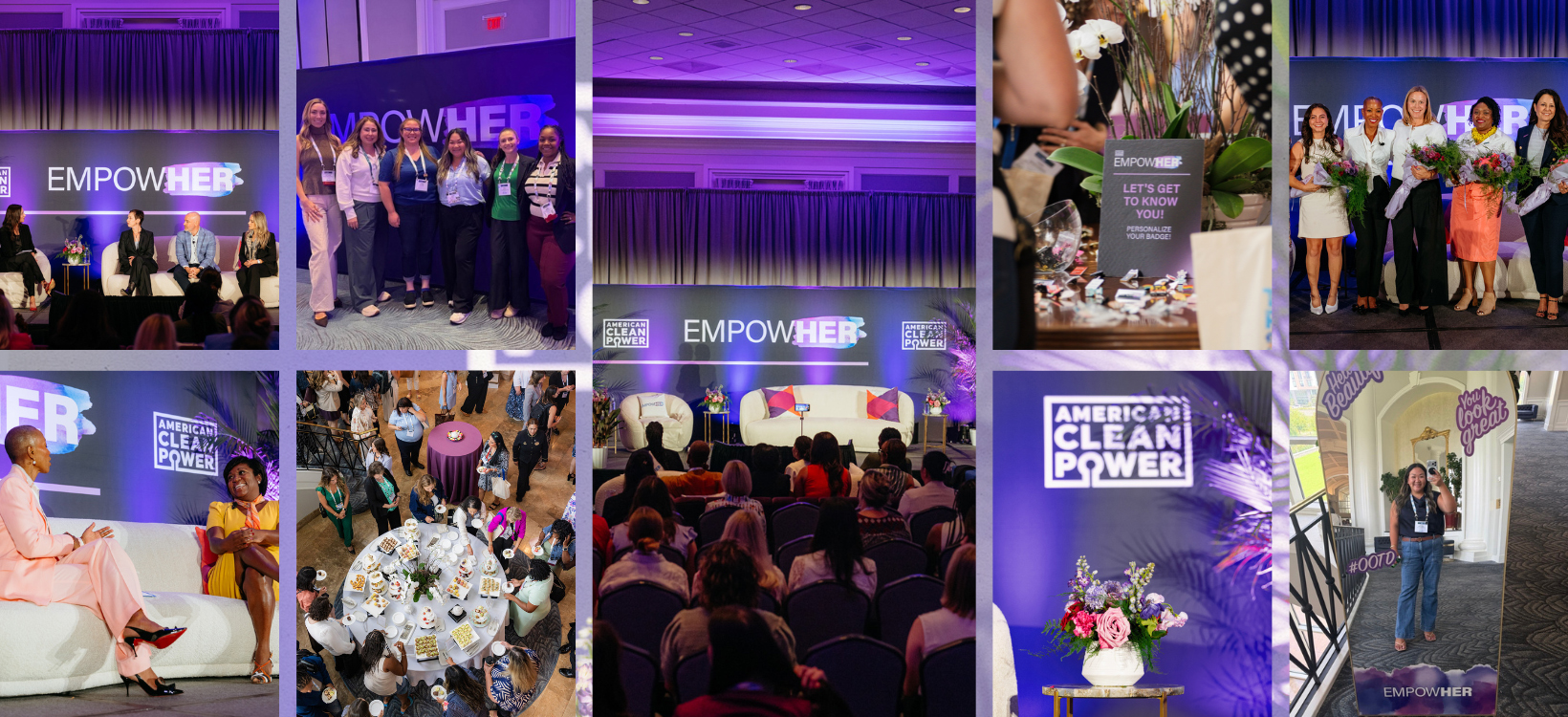
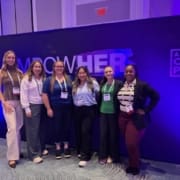
Affiliated with American Clean Power, EmpowHER’s second annual conference in Charlotte, North Carolina, brought together several hundred women from across the renewable energy industry for a few days of connection, learning and candid conversation. I was grateful for the opportunity to attend and I left energized by both the people I met and the conversations happening across the industry.
Hosted at The Ballantyne, the conference had an energy that was welcoming but also ambitious. The agenda brought together an impressive group of women leaders for thoughtful discussions about some of the issues shaping our industry and our careers.
Sessions covered everything from the evolving policy landscape and the growing role of AI to leadership development, management and allyship among women. What stood out to me was the range of perspectives in the room. Women at different career stages and leadership levels came together not only to learn from one another, but to have meaningful conversations about where our industry is headed and how we can help shape it.
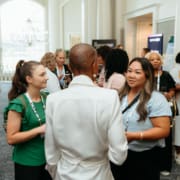
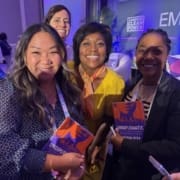
From networking breakfasts to afternoon tea, to the valuable after-hours socializing, I found a seat at each table, surrounded by different groups of women each time. I was welcomed with warmth, kindness and the ears of peers who face the same challenges I do in this industry.
Finding Connection and Belonging
For many women entering the renewable energy industry, it doesn’t take long to notice that we are still underrepresented in a field historically dominated by men. I’ve felt that personally, both as a woman and as a woman of color navigating an industry that is continuing to work toward greater diversity.
While those differences can sometimes feel like challenges, I’ve come to see them as part of the perspective and value I bring to my work. That idea came through powerfully in the keynote from Deesha Dyer, founder of Hook & Fasten, former White House social secretary during the Obama administration and author of Undiplomatic.
Her message of being “One of One” stayed with me: There is no duplicate of me and there is no duplicate of you. Each of us brings experiences, perspectives and strengths that no one else can replicate. Rather than minimizing those differences to fit into the room, we can recognize them as part of what we uniquely contribute to. And in an industry working to solve complex challenges and build a different energy future, those perspectives have real value.
That idea ended up threading through everything I heard over the next two days, even in sessions that, on the surface, had nothing to do with representation.
Why This Matters to Our Industry
Representation matters, but not simply because of who is visible in the room. It matters because different experiences create different ways of thinking, asking questions and approaching problems. As the renewable energy industry grows and the challenges we face become more complex, that diversity of thought is increasingly important to how we move forward.
Our industry is navigating technical challenges, an evolving policy and regulatory environment, changing customer needs and growing expectations from the communities we serve. No single perspective can account for all of that. Bringing together people with different backgrounds, experiences and points of view helps us challenge assumptions, see problems from new angles and ultimately make better decisions.
That’s one reason conferences like EmpowHER are so valuable. They create space for women across roles, backgrounds and career stages to exchange ideas, learn from one another and build the relationships that will help shape the next generation of leadership in renewable energy.
Women from our organization are contributing at every level, from managers and directors to senior leaders and executives. Seeing them engaged with peers from across the industry reminded me that representation is most meaningful when people aren’t simply present; they have a voice in the conversations and decisions shaping what comes next.
It’s something I’m fortunate to see firsthand at SMA. Different perspectives are represented across our organization and within leadership, bringing a broader range of experiences and ideas into how we think about our business and the future of our industry.
That same idea kept surfacing throughout the conference: Who is in the room influences the questions we ask, the ideas we consider and, ultimately, the solutions we build.
Federal and State Election Outlook: What’s Ahead for Clean Energy Policy
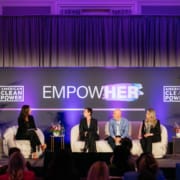
Moderated by Frances Cook, vice president of procurement at Clearway Energy Group, this panel featured Frank Macchiarola, chief advocacy officer at American Clean Power Association; Sarah Cottrell Propst, MPA, senior vice president of state affairs at American Clean Power Association; and Gizelle Wray, vice president of external affairs, regulatory strategy and communications at Deriva Energy.
The session turned the lens toward what’s ahead for clean energy policy and the message was loud and clear: the industry is navigating a shifting and uncertain policy landscape. With tax credit incentives revoked and bipartisan issues bleeding into a national crisis, our work in this industry has gotten harder. Community engagement, outreach and support are critical areas for the industry to address. From siting and permitting, campaigning alongside governing officials and building relationships early on with grassroots candidates are essential to keeping our industry’s voice in the ears of the people with the power to support us. Listening to this panel, it struck me that this is exactly where representation stops being abstract. When the industry is under pressure and every relationship and every voice at the table counts, having more of us in those rooms isn’t a nice-to-have. It’s how we protect the work.
No Surprise, AI Is Here to Stay, so How Do We Work With It?
Brannon Woods Skillern, strategic HR adviser and founder of Carnelian Collective, took on the fear of AI in the workplace and spoke about trust and psychological safety around it. Her line “arm us, not fire us” resonated with me the most. Like anything new and large enough to bring real change, AI sparks hesitation and fear, the fearmongering that it will take over jobs or replace critical roles in organizations. That may be true in some instances, but there’s another facet of AI we need to turn our attention to– a diamond in the rough. Can we start looking at the beauty of it instead?
The willingness to lean into these changes, not out of fear but as something to learn, embrace and adapt with, is what matters. AI has helped women in the renewable energy industry plan real-life annual objectives, map out itineraries, manage personal admin, provide professional fashionista guidance and work through learning courses. There’s a natural fear that comes with digital transformation, where change can default to discomfort.
Can workplaces help teach us? Can they provide clear training and governance around AI? When executives openly share and welcome AI, they can lead by example: reward it and remove the stigma that using AI is somehow shortcutting, cheating or something to be punished. Instead, workplaces should provide governance, training and positive examples of how AI can support productivity and serve as a vessel to bounce ideas from. And of course, with any automation, the human element is still essential. We can’t blindly lead with AI-generated responses. We have to filter them, double-check them and audit its work.
The Human Skills AI Can’t Replace
When the panelists were asked what human skills remain valuable alongside AI, all four speakers landed on the same note: AI is not human and that connection is irreplaceable. AI cannot feel empathy, connection, imagination or creativity. Rather than leaning on its capabilities to do the whole job, we should let it help us build the foundation of what we’re looking for and take it from there. When AI helps save time, you can reinvest that time into your own growth. And honestly, “arm us, not fire us” isn’t just about AI. It’s the same psychological safety women in this industry are asking for more broadly: give us the tools and the trust and we’ll show you what we can do with them.
And though we work in the renewable energy industry, it was Brandy McGraw, GE Vernova’s executive site leader, who put it best: “Keep your eye on the prize; time is not renewable.”
Closing Thoughts
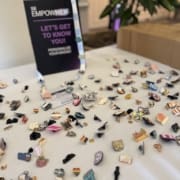
The conference fully embodied empowerment. From hearing the C-suite perspective, to asking for help, whether from a sponsor or a mentor, to Kelly Veney Darnell’s, COO of American Clean Power Association, “take it” methodology, to Deesha Dyer’s clean-version affirmations of Megan Thee Stallion’s “Worthy,” to building your personal brand and sharpening your executive presence, to unwinding at the custom charm and fragrance bar, this conference led with celebrating our successes, staying flexing the curiosity muscle, learning when we don’t know the answers and remembering to send the elevator back down for those coming up behind us.
Imposter syndrome was at its finest at the beginning of the conference. I wasn’t sure where I’d fit in or who I’d be able to connect with. To my surprise, EmpowHER was a safe place, where we made space for each other, celebrated one another and encouraged growth through new networking connections. I started at EmpowHER not knowing any contacts and left with a handful of women I can now call friends and colleagues.
That’s really what “One of One” meant to me by the end of it. None of us are replaceable, and none of us are alone either. I can’t wait to see these women around the industry at the next event and I’m looking forward to EmpowHER 2027.
Feel free to contribute!