
Solar Spotlight: Joe Czajkowski Farm
A Model for Agrivoltaics and Sustainable Farming in the Pioneer Valley
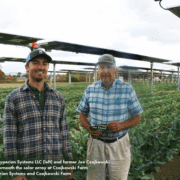
Joe Czajkowski Farm, located in Massachusetts’ Pioneer Valley, is setting a new standard for sustainable agriculture by combining traditional crop production with solar energy generation. Owned and operated by third-generation farmer Joe Czajkowski, the farm spans over 400 acres and supplies fresh produce to a wide range of customers, including UMASS Amherst Dining Services, Springfield Public Schools, Trader Joe’s and Whole Foods.
For more than 45 years, Joe has cultivated a rotating mix of crops such as beets, broccoli, tobacco, corn and spinach. Recently, he adopted a forward-thinking approach to land use by integrating agrivoltaics, a dual-use strategy that allows solar panels and crops to coexist on the same land.
“It helps your cash flow, it makes your farm more viable and I think it’s better for the country and for the environment,” said Czajkowski. “I’m getting paid for the electricity and I also get a discount on my electric bill… it was a very good deal for us.”
What Is Agrivoltaics and Why Is It Important?
Agrivoltaics, also known as dual-use solar farming, is the practice of using farmland for both agricultural production and solar energy production. This allows farmers to maintain crop yields while generating clean energy, creating a sustainable revenue stream and improving land-use efficiency. This approach is especially valuable in areas where farmland is under pressure from development or climate change.
Agrivoltaics are designed to coexist with farming operations, often using elevated solar arrays and strategic spacing to ensure crops receive adequate sunlight and airflow. The result is a win-win: energy generation without sacrificing agricultural productivity.
A Smart Solar Setup with SMA PEAK3 Inverters
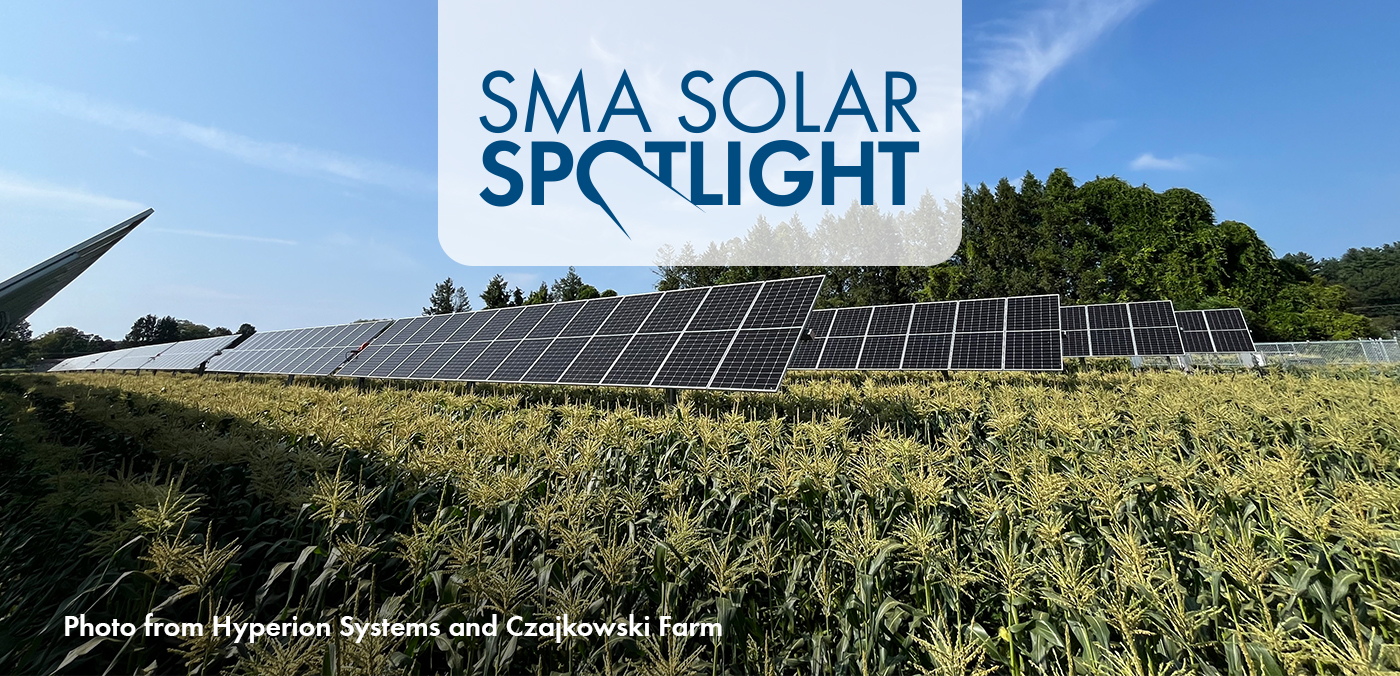
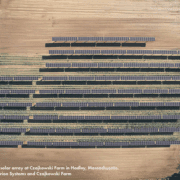
In collaboration with Hyperion Systems, Czajkowski’s farm now hosts a 445 kW DC / 375 kW AC solar array spanning 2.2 acres, located adjacent to active crop production areas. The system includes 832 JA Solar modules mounted on single-axis trackers that follow the sun throughout the day, maximizing energy production without expanding the array footprint.
At the heart of the system are three SMA Sunny Highpower PEAK3 inverters, chosen for their:
- Exceptional reliability
- High performance
- Flexible design options
- Scalable configurations
These features make the PEAK3 inverters ideal for agrivoltaics, where uptime and long-term durability and adaptability are essential. Jake Marley, managing director of Hyperion Systems, explained that the decision came down to SMA’s “superior long-term quality compared to others on the market,” making the PEAK3 a perfect fit for the farm’s solar energy needs.
Designed for Dual Land Use
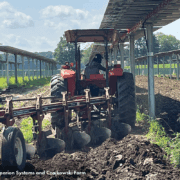
The solar array’s elevated design and 27-foot row spacing allow tractors and other farm equipment to move safely between panels. Depending on the task, equipment can typically make two to three passes between rows. Core farming activities such as tilling, subsoiling, planting, spraying, harrowing and cultivation continue uninterrupted within the solar array.
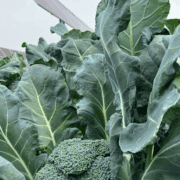
In 2023 and 2024, Czajkowski successfully harvested broccoli within the array area. This real-world success demonstrates the practicality and scalability of agrivoltaics, proving that clean energy and agriculture can thrive side by side.
In 2025 Joe rotated out of broccoli to sweet corn – specifically selecting a variety that wouldn’t grow past 7’ tall. Joe planted 8 rows of sweet corn between each of the solar racking rows, it was inspiring to see a sun loving crop like corn succeed under the partial shading conditions.
Recognition and Impact
Joe Czajkowski Farm has been nominated for several agrivoltaics awards, including Project of the Year and Solar Farmer of the Year at the 2024 Solar Farm Summit. His story serves as a model for other farmers looking to diversify income, improve sustainability and contribute to the clean energy transition.
Looking Ahead
Joe Czajkowski Farm exemplifies how innovation in agriculture, through agrivoltaics and solar technology, can lead to more resilient, profitable and sustainable farming practices.
This project has been so successful for the Farm, Joe and Hyperion have 2 other projects in development that they plan to build in 2026.
As more growers explore dual-use land strategies, the success of projects like this one highlights the potential for clean energy and agriculture to work together.
Feel free to contribute!