
Solar Spotlight: Solar Goes to the Dogs (and Cats)
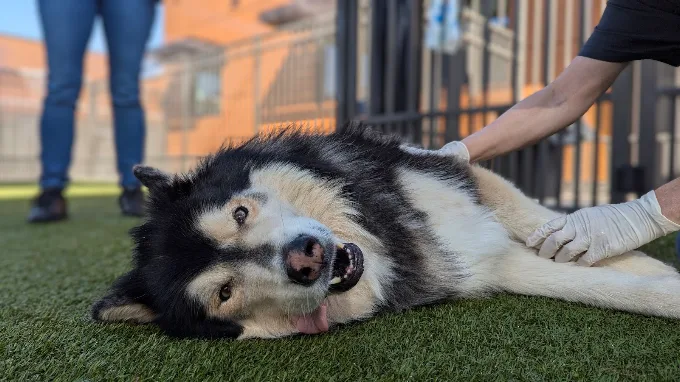
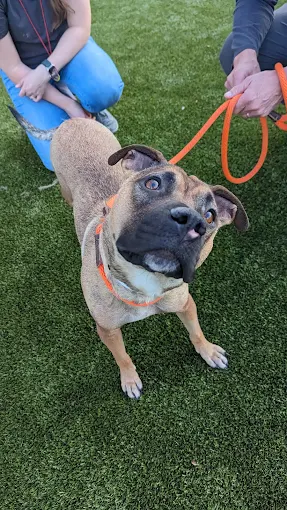
At the Arizona Humane Society’s Papago Park Campus, the click of a leash means one thing: it’s time for a walk. Tails start wagging, paws hit the pavement and, under the Arizona sun, those paws now have a little more protection along the way.
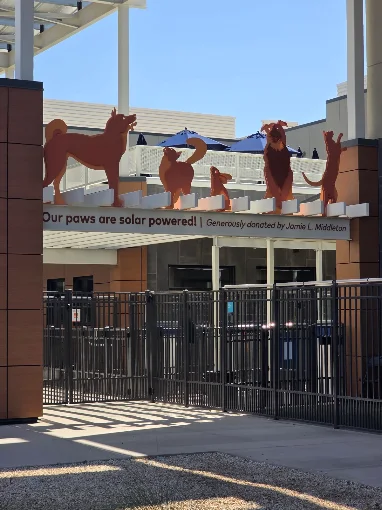
Solar canopies provide shade over campus walkways, creating a cooler path for the animals and people who use them every day. Overhead, the same system is producing clean energy and helping reduce operating costs for the nonprofit.
It’s a small picture of what makes this project special. The energy produced here has a direct connection to Arizona Humane Society’s mission. Every dollar saved on electricity is a dollar that can stay focused on caring for animals in need.
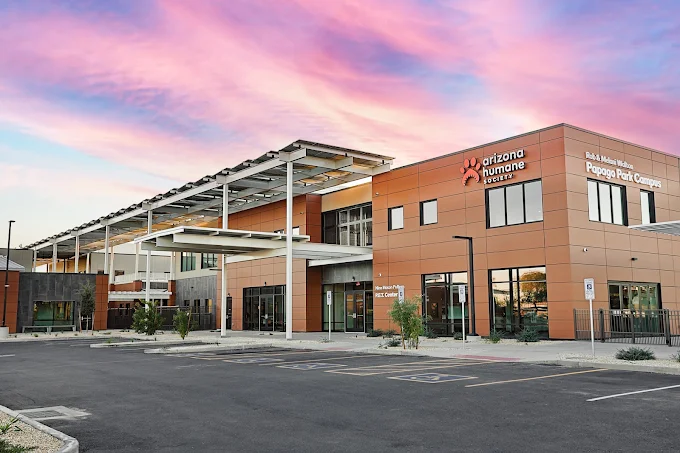
Commercial Solar Arizona designed and built the 493.58 kW solar installation, which was commissioned in August 2024. Featuring SMA inverter technology, the system is estimated to fetch 890,830 kWh of electricity annually and has already exceeded performance expectations.
For an organization dedicated to caring for animals, that makes this one pretty pawsitive solar story.
Built Around the Mission
Commercial Solar Arizona served as the engineering, procurement and construction partner for the project, managing the system from initial design through permitting and construction. The company continues to monitor and service the installation today.
The project was made possible through the support of donor Jamie L. Middleton and includes a combination of SMA Sunny Tripower CORE1 50-US and 62-US inverters, along with Sunny Tripower X 20-US and 30-US inverters.
The result is a system that is performing exceptionally well even by Commercial Solar Arizona’s standards.
“Of the more than 75 MW our O&M department services across Arizona, this project is one of our most productive systems,” said Sophia Vallejera, sales and marketing specialist at Commercial Solar Arizona.
That production has a direct connection to Arizona Humane Society’s mission. Lower energy costs mean more operational dollars can remain focused on programs and services supporting animals in need. Solar canopies on the campus also provide shade along walkways, offering another practical benefit in Arizona’s desert heat for people and their furry companions.
Choosing Equipment for Arizona Conditions
For Commercial Solar Arizona, equipment selection is particularly important in a market where intense heat puts solar technology to the test.
“We value suppliers who consistently deliver quality, reliability and responsiveness,” said Amanda Lysaght, business development and marketing at Commercial Solar Arizona. “Beyond providing a strong product, the best partners communicate proactively, stand behind their equipment and help us deliver successful projects for our customers.”
After working with and evaluating multiple inverter manufacturers, Commercial Solar Arizona has found SMA solutions well suited for the demanding Arizona environment.
“SMA’s products perform exceptionally well in Arizona’s harsh desert climate, where reliability is critical,” Lysaght said. “Just as important, their team keeps us informed about product updates, future technology developments and industry changes so we can make the best decisions for our clients.”
That relationship extends beyond a single project. Commercial Solar Arizona sees the combination of reliable equipment and knowledgeable support as an important part of delivering projects that perform well throughout their operating lives.
Solar’s Expanding Role in Arizona
The Arizona Humane Society project also reflects a broader shift Commercial Solar Arizona is seeing across the market.
Battery energy storage is becoming an increasingly important part of the conversation as utility rates evolve, grid constraints increase and customers seek greater energy resilience. Instead of evaluating solar as a standalone investment, more organizations are considering integrated solar-plus-storage systems.
The role of the EPC is evolving alongside those projects. Customers increasingly need partners that can help them navigate utility interconnection, permitting, incentives and increasingly complex engineering requirements while keeping projects moving.
That expertise will become even more important as Arizona continues to grow and electricity demand rises. Manufacturing, data centers and industrial development are creating significant new demand for power, while businesses are also looking for ways to manage operating costs and meet sustainability goals.
Distributed solar can help address both.
For Arizona Humane Society, the benefits are already being realized. A high-performing solar system is lowering energy costs, supporting the organization’s mission and making its campus a little more comfortable for the animals it exists to protect.
That’s something worth wagging a tail about.
Feel free to contribute!